






An inconvenient truth: 2026
Dozens of world leaders are in New York for annual gathering at the United Nations (UN). They have a lot to talk about — wars, an oil shock, the risks of A.I., and a shifting world order.
Not to be outdone, our own Prime Minister, Anthony Albanese, is there and has unveiled Australia's pitch for a seat on the UN’s Security Council.
As ever, a determine 'Albo' has released Australia's campaign video, brochure and logo — featuring the kangaroo.
Australia's pitch for one of two available non-permanent seats (for the 2029-30 term) comes with the tagline: “We listen. We partner. We protect what matters most.”
One thing that looks set to be less of a talking point is climate change. Despite Albo apparently wanting to promote “its leadership on climate change, as this year’s COP31 president of negotiations”. The irony of course, which hasn't been missed by too many Australians is the Albanese Government's continuing approval of new coal mines - (second to Russia, we are the largest exporter of carbon pollution on the planet) - and the refusal to introduce a resource tax on gas mining—who gives away a resource for free and then buys in back refined? Australia does!
23 September 2026
ALAN HAYES
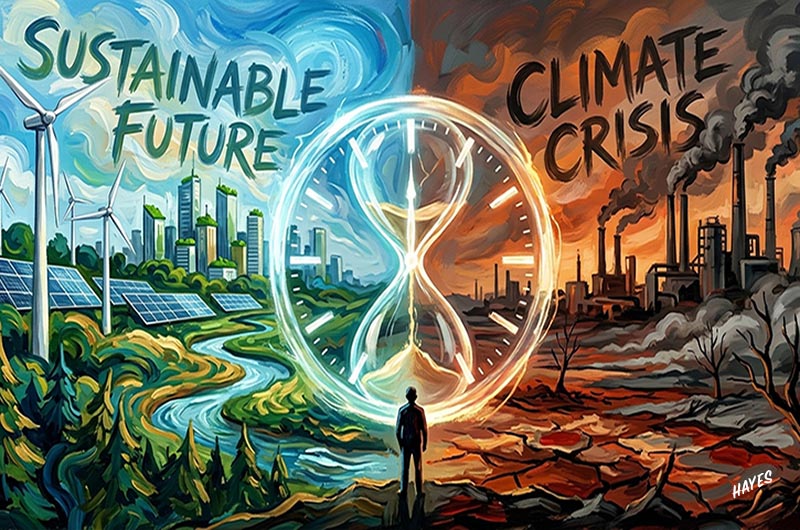
SO, as the UN soiree gets underway, I’m reminded of twenty-years ago when ‘An Inconvenient Truth’ hit movie theatres. And only eight years ago, Fridays for Future was a global youth movement. The following year, Green parties all over the World made historic gains. Today, extreme weather has turned climate change from an abstract future threat into a real and present danger. And yet, the climate feels much less central to the political agenda, including that of our own government—despite all the chest huffing and puffing about protecting the future of our planet.
The question that continues to nag in the back of my head is “why are world leaders so quiet on climate change when it’s been producing a steady stream of headline news this year?”
Scratching my head, I surmised, notwithstanding the inane antics of Mad King Donald, there’s a lot going on right now that may be causing the distraction— whether it’s war or A.I. or tariffs, the world is just consumed by a host of other crises. But most importantly, pushing climate change into the background has lot to do with Trump.
Trump’s sycophants have dismissed the threat of climate change and have been working to promote fossil fuels, reduce environmental regulations and stymie America’s adoption of renewable technologies. The rest of the world may be moving in a different direction, but they’re, at some level, captive to the American narrative, just by virtue of America’s power in the world.
The other reason that comes to mind as to why climate change is being sweep under the carpet is that many world leaders still have a hard time talking about climate. The actual solutions that are necessary to meaningfully slow down global warming require whole-cloth changes to our economies and energy systems that no one country alone can accomplish.
Only a very few years ago, people involved in climate policy were using the phrase “keep 1.5 alive.” That number referred to 1.5 degrees Celsius, which is the threshold above preindustrial temperatures that scientists warned would be very risky to cross. Well, we’re already at 1.5 today, and every indication suggests that the planet is on track to warm somewhere between two and three degrees Celsius above preindustrial levels. A lot of that warming is going to happen in the coming decades and century.
Although there is real positive momentum happening on the ground to tackle climate change, if you know where to look, major economies like China are turbocharging their adoption of renewables. It’s happening in less developed countries like Pakistan too, which is adopting things like e-scooters. So, there’s progress. But even when that progress is happening on a large scale, it’s still a drop in the bucket. We’ve got a long way to go, even here in Australia.
With the A.I. industry looking to move data centres to Australia, and the government keen on the ‘wedding’ to take place sooner than later, we have a real problem.
The ‘wedding’ between the Australian federal government and global tech giants racing to expand AI data centres has created a severe national bottleneck. While the Albanese government wants to rapidly secure Australia’s position as a global digital capital, the infrastructure required to power these facilities is threatening to derail the country’s power grid.
National Cabinet recently softened restrictions, allowing fossil-fuel states like Queensland and the Northern Territory to use coal or gas to prevent local grid collapse, directly contradicting net-zero timelines.
Dozens of already approved data centre builds—including massive projects by Amazon and Anthropic—will escape the upcoming 2027 restrictions entirely, and lock-in massive grid loads before the law takes effect.
Large A.I. data centres require millions of litres of water daily for cooling. While the government's upcoming national standards aim to mandate recycled water, communities are pushing back over fears of competing with big tech for regional water security during future droughts.
The government is walking a tightrope, too: moving too fast on A.I. risks public backlash over resource depletion and skyrocketing consumer utility bills. The rapid expansion of A.I. data centres in Australia also introduces severe intellectual property (IP) theft risks, creating a complex national security and corporate data challenge. As the Australian Government accelerates its regulatory framework, sovereign data is colliding with sophisticated cyber threats.
The climate change dilemma
Doubling down on fossil fuel just to placate the move of A.I. centres to Australia does little to reinforce the government’s green credentials.
Take natural gas—Australia is ever increasing its export of fossil fuels. We may not burn it here but burning it elsewhere on the planet doesn’t make you environmentally responsible. Natural gas is a major pollutant and is warming the planet.
But to understand what’s happening globally on climate, you also have to understand what’s happening in the United States. Mad King Donald’s administration is using natural gas exports as a diplomatic tool. They’re actively encouraging countries around the world to hasten their adoption of natural gas, which makes it much harder for many countries to move quickly to address this issue.
The doubling down to fight climate change has now become part of my story as it has for many other good people living on the Central Coast. We came together to protect the Central Coast’s major drinking water catchment from gas and coal mining, and won. But the battle is never over—protecting the planet from climate change is not going to be solved in my lifetime, although I believe all the dedicated environment warriors have made progress. Their unrelenting dedication has been for the sake of preventing additional disasters and biodiversity and ecosystem loss. At the same time, I, as many others do, recognise the modern world is built on technologies that are exacerbating these problems. So, figuring out that puzzle is endlessly compelling and has become the greatest collective action problem in the history of humanity. We have to figure it out—because if we don’t, we’re going to have a much harder time surviving on this planet.



.jpg?crc=4257584689)


_web.jpg?crc=282450513)



SUBSCRIBE FOR FREE to the Grapevine News Online and to the monthly e-book edition of the Grapevine Community Weekly. Our online news platform and monthly newspaper is about real local news and events. We will not spam you or share your details with third parties.
